
News

Modern engines offer impressive power and low fuel consumption, but they are much more sensitive to service errors than their older counterparts. In many cases, choosing the right oil is key to protecting the engine—a product that doesn’t meet the specifications can quickly lead to costly breakdowns. Learn about engine designs where strictly following the manufacturer’s recommendations is of the utmost importance.
Engines with Wet Timing Belts
Engines equipped with wet timing belts—such as the Stellantis 1.2 PureTech, Ford 1.0 EcoBoost, or Ford 2.0 EcoBlue—require special attention. The belt operates in an oil bath, so its service life depends directly on the chemical composition of the lubricant.
In the case of the Ford 1.0 EcoBoost engine, it should be noted that it underwent a redesign during production; newer versions use a timing chain. Due to market and model variations, there is no single cutoff date for the redesign, so if in doubt, it’s advisable to verify the engine version at an authorized service center using the VIN.
Using oil that does not meet the manufacturer’s requirements can lead to accelerated degradation of the belt material. As a result, the belt weakens, flakes off, and releases particles that circulate in the lubrication system and can clog it. This can result in a broken timing belt or engine seizure due to a drop in oil pressure.
Importantly, in many designs—even those with a timing chain—an additional wet belt is used to drive the oil pump. This component is not visible from the outside, which further underscores the need to strictly follow the manufacturer’s oil recommendations.
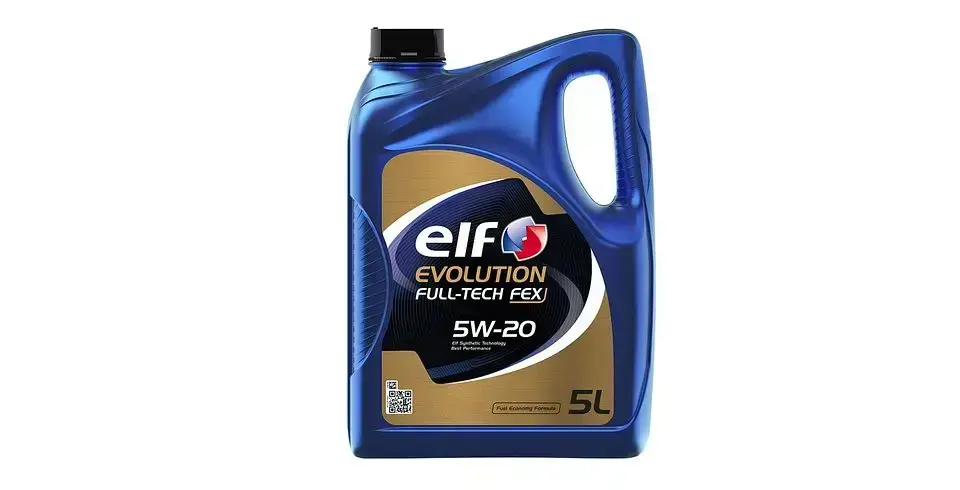
In practice, this means you must use oil that has the appropriate manufacturer approval. An example is ELF Evolution Full-Tech FEX 5W-20 (ACEA C5, API SN) with Ford WSS-M2C-948-B approval, confirming its compatibility with 1.0 EcoBoost engines equipped with a wet timing belt.
Engines in hybrid vehicles, including Toyota’s 1.8- and 2.0-liter hybrid engines and engines from other manufacturers
In full hybrids and plug-in hybrids, internal combustion engines operate under specific conditions. The engine starts and stops repeatedly while driving, often runs while still cold, and can quickly reach high RPMs after starting. Such operating conditions require the use of low-viscosity oils—e.g., 0W-20, and in some designs even 0W-8.
Equally important are parameters such as oil film shear stability, compliance with Low SAPS requirements, and the mitigation of LSPI. These requirements are specified in manufacturers’ certifications.
Using an oil with the wrong viscosity, such as 10W-40, can quickly lead to inadequate lubrication and serious damage to the powertrain. It’s also worth noting that an increasing number of hybrid vehicles are equipped with direct fuel injection and a particulate filter, which further raises the demands on the lubricant.


The ELF product range includes a variety of lubricants that meet the requirements of modern hybrid powertrains, including: Evolution Full-Tech APX 0W-20, Evolution Full-Tech VCX 0W-20, Evolution Full-Tech VSX 0W-20, Evolution R-Tech Elite FE 0W-16, and Evolution Full-Tech R FE 0W-20.
High-Performance Downsizing Engines
The turbocharged BMW 1.5-liter engine is an example of a modern, high-performance downsizing engine. Depending on the version, it delivers between 102 and as much as 231 KM, and the top-of-the-line variants generate torque of up to 320 Nm.
The engine has a compression ratio of 11.0:1 and is equipped with direct gasoline injection, turbocharging (twin-scroll), and the Valvetronic and Double-VANOS (variable camshaft geometry) systems. Such an advanced design places exceptionally high demands on oil quality and performance. These high-performance engines are also very sensitive to oil quality due to the occurrence of LSPI.
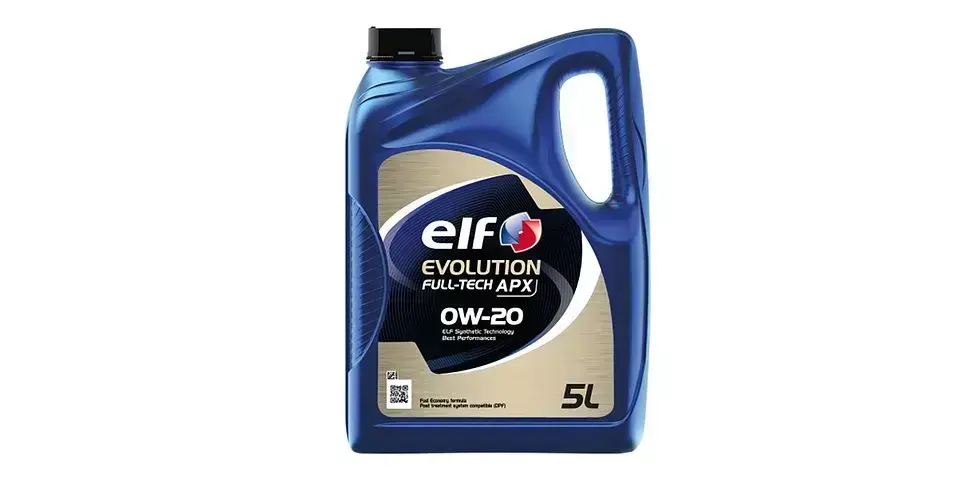
For this engine, one suitable option is an oil that meets the BMW LL-17 FE standard, such as ELF Evolution Full-Tech APX 0W-20 (ACEA C5, API SN-RC), which has been tested and approved by the manufacturer as fully compliant with the requirements.
Using a product without the appropriate approval may accelerate wear on the crankshaft assembly and other components whose service life directly depends on the quality of the oil film.
Choosing the Right Oil: A Key Element in Protecting a Modern Engine
Modern engines offer high power, low fuel consumption, and reduced emissions, but in return require precise maintenance. Selecting an oil that meets the manufacturer’s specifications is not a mere formality but one of the most important factors affecting the engine’s durability and reliability. In modern engine designs, even a slight deviation from the recommendations can pose a real risk of costly repairs.