
News

Many drivers, when buying engine oil, focus primarily on its viscosity grade or rely solely on the manufacturer’s brand. This is a serious mistake. Modern engines require a much more precise selection of lubricant, and ignoring the manufacturer’s approval can, in extreme cases, lead to costly engine failure.
Viscosity alone is not enough
Viscosity grade has long ceased to be a sufficient criterion for selecting oil. Modern engine designs require products with specific vehicle manufacturer approvals - that is, certifications confirming that a given lubricant meets the stringent requirements of a specific brand and a specific engine.
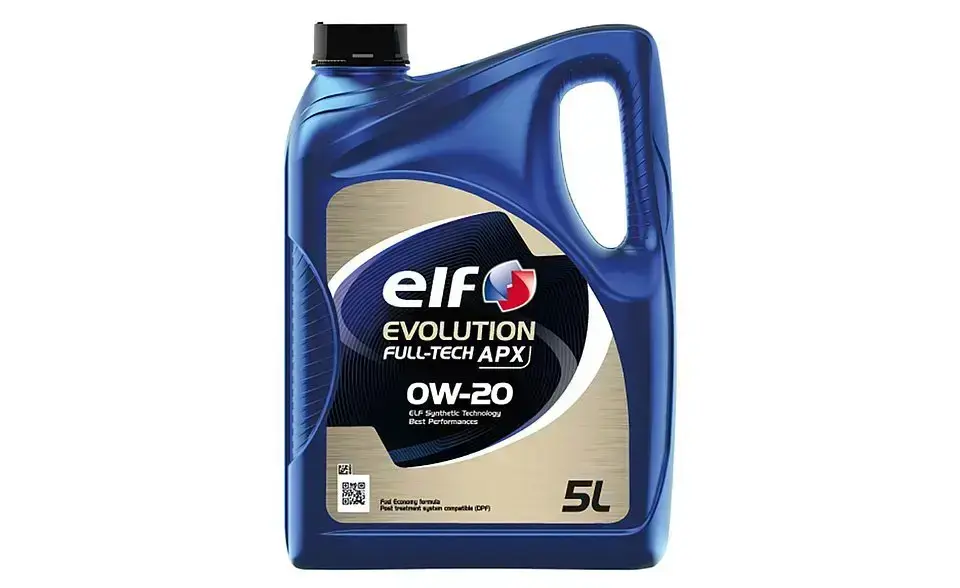
Importantly, within a single brand - such as Mercedes-Benz there are many different approvals assigned to specific engines. Additionally, oils with the same viscosity grade may have completely different approvals. For example, among 0W-20 oils in the ELF Evolution Full-Tech product line, there are five different variants, each with different approvals. These are different formulations with different compositions, which is the best proof that viscosity alone is not sufficient when selecting a product for a specific engine.
Special Requirements of Modern Engines
Owners of older German diesel vehicles may be familiar with the Volkswagen Group’s 505.01 approval. This standard was designed for engines with unit injectors and required the oil to have high shear stability, enhanced soot dispersion, and anti-wear properties. This was crucial for the durability of engines in which the unit injectors were driven by cams on the camshafts. Some lubricant manufacturers even included the note “for unit injectors” on their packaging. Using an oil with an approval designation very similar to 505.00 significantly shortened the engine’s service life. This clearly illustrates the importance of the correct approval a seemingly minor difference in the designation translates into significant differences in the oil’s performance and application.
Today, the requirements are even more complex. Engine manufacturers use advanced technical solutions that require oils with strictly defined properties. There are numerous examples of such standards:
LL-17 FE – approval for modern BMW 1.5 TwinPower Turbo engines; ELF Evolution Full-Tech APX 0W-20 meets this standard,
FORD 954-A1 – approval for the latest EcoBoost engines in mild-hybrid systems,
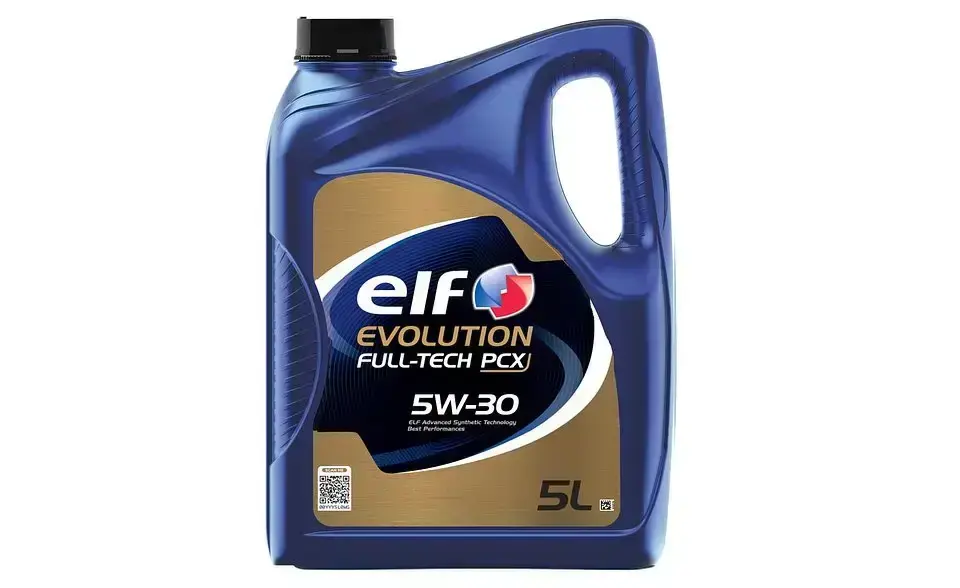
Stellantis FPW-03 – a standard used, among others, in 1.2 PureTech – EB Turbo Euro 6.1/6.2 engines; ELF Evolution Full-Tech PCX 5W-30 meets this standard.
Approval – the most important guide for the buyer
The simplest and safest method for selecting an oil is to check the vehicle’s owner’s manual for the specific approval and choose a product with exactly the same approval listed on the packaging. If the Ford manual specifies the FORD 954-A1 standard, you should choose an oil with that designation.
If a BMW specifies the LL-17 FE approval, the correct oil will be one with LL-17 FE approval.
Other parameters, such as viscosity itself, are of secondary importance compared to the engine manufacturer’s requirements.
Where do these approvals come from?
Approvals are the result of advanced research and testing conducted in collaboration with vehicle manufacturers. To obtain approval, the oil undergoes laboratory tests and testing on the manufacturer’s engine dynamometers. The following are checked, among other things:
In practice, the manufacturer’s approval is now the most important quality criterion when selecting oil for a modern engine. Viscosity is a secondary parameter that, in most cases, is linked to the approval.
How to find the right oil?
Information about the required approval can always be found in the vehicle’s owner’s manual.
Additionally, you can use online product search tools, such as the “Choose Oil” tool on the ELF website. After entering the make, model, model year, and engine version, the system displays recommended products along with the corresponding manufacturer approvals.
For the oldest models, especially those manufactured before 2006, approvals may not be available because the approval system was less comprehensive in the past. In such cases, you should refer to the viscosity grade, API and ACEA quality standards, and any additional manufacturer requirements.